Fokus på udsagnsord i nutid
Link to the top of the page.
Gloser
- middle-aged = midaldrende
- couple = par
- in fact = faktisk. Yderst almindeligt udtryk
- except = undtagen
- across = på den anden side
- expensive = dyr
- platform = perron (til tog)
- prefer = foretrække
- arrive = ankome
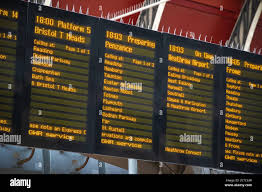
- departure board = afgangstavle, viser afgange på stationer og i lufthavne
- arrival board = ankomsttavle, viser tilsvarende ankomster
- really = virkelig
- Oyster card = “østers-kort”. Et rejsekort, som i en periode giver fri adgang til busser og tog i London
- free access = fri adgang
- ‘Mind the gab’ = ‘Pas på afstanden’. Der er lidt afstand mellem undergrundstogene og perronerne, og derfor er der ved hver station et højtalerkald, når toget stopper
Link to the top of the page.
Debbie and William are a middle-aged couple from Texas. They are going to visit London and it is their first visit to Europe. In fact they have never really been outside the US except for some short visits just across the border to Mexico. And when they travel, they travel by car. So they are not at all used to trains and buses. But they want to see London and they will also go to visit some friends there.

Part 1. Arriving at London.
Debbie: “Wow, this is London Heathrow Airport. It is very big, almost as big as Dallas Airport.”
William: “Yes, I feel a bit lost. There are many people here.”
Debbie: “I think we need help.”
William: “Yes, you are right.”
Debbie: “Excuse me, can you help us please?”
Staff: “Yes, I can help you. What do you need?”
William: “We want to go to the city centre. Should we rent a car or take a cap?”
Staff: “Please don’t go by car to the centre, that would be crazy. There is no parking and the traffic is very slow. A taxi is also expensive and slow. The best thing to do is take the train. Please follow the signs to the platforms.”
Debbie: “Thank you. Where do we buy tickets?”
Staff: “You can buy tickets at the ticket machine over there.”
William: “I don’t like ticket machines. They are confusing.”
Debbie: “Let’s try together. We can do it.”
William: “I press this button, and it shows many options.”
Debbie: “You choose two tickets to Paddington Station.”
William: “It does not work now.”
Debbie: “Try again. It works when you press here.”
William: “Okay, now it works. We have tickets.”
Debbie: “Good. Let’s go to the train.”
Debbie: “We are on the train now. And it moves fast.”
William: “I prefer my car.”
Link to the top of the page.
Part 2. Going Underground.
- arrive = ankome
- departure board = afgangstavle, viser afgange på stationer og i lufthavne
- arrival board = ankomsttavle, viser tilsvarende ankomster
- really = virkelig
- Oyster card = “østers-kort”. Et rejsekort, som i en periode giver fri adgang til busser og tog i London
- free access = fri adgang
- by the way = egentlig “med retningen”. Men et fast udtryk, der betyder “forresten”. Meget brugt i England
- way = ikke en vej til at køre på men “retning/vej”. This way = denne vej eller denne retning. Way out = udgang
- ‘Mind the gab’ = ‘Pas på afstanden’. Der er lidt afstand mellem undergrundstogene og perronerne, og derfor er der ved hver station et højtalerkald, når toget stopper
- anthill = myretue (ant = myre)
- different = forskellig
- friendly = venlig
- change = ændre, skifte
Debbie: “Now we arrive at Paddington Station.”
William: “Do we really need new tickets for the Underground?”
Debbie: “I think we do.”
William: “Let’s ask.”
Debbie: “Excuse me, what do we do now? We want to go to Oxford Circus.”
Staff: “Are you tourists and how long do you plan to stay in London?”
Debbie: “Yes we are tourists from Texas and we plan to stay in London for a week.”
Staff: “Don’t buy normal tickets for every ride, it will be too expensive for you. The best that you can do is to buy an Oyster card for seven days. All tourists in London have an Oyster card.”
William: “Is an Oyster card used for fishing? What does it do?”
Staff: “It gives you free access to trains and buses in the town centre.”

Debbie: “That sounds good. We take two cards.”
William: “Yes, we need them.”
Staff (smiles): “By the way mind the gab”
Debbie (confused): “Excuse me but what do you mean?”
Staff (smiles again): “It is your first time in London, right? When the underground train stops at a station, they always announce ‘Mind the gab’ at every underground train arrival at every station. But you will hear that very soon”.
Debbie: “We want to go to Oxford Circus.”
William: “Let’s look at the map over the Underground system.”
Debbie: “The map is big, and it has many lines.”
William: “I don’t understand that map. It looks like a lot of worms in different colors.”

Debbie: “We go from Paddington to another station.”
William: “Then we change trains.”
Debbie: “Yes, we change once.”
William: “I don’t like that. I am afraid that we will get on the wrong train. This place is like a anthill.”
Debbie: “We ask again. People are helpful”
William: “Good idea.”
Debbie: “Excuse me, how do we get there?”
Passenger: “You take the Circle line, and then you change at Notting Hill Gate to the Central line. Then you get off at Oxford Circus.
William: “That sounds difficult.”
Debbie: “We follow the signs. They help us.”
Debbie: “We are on the right train now.”
William: “I hope this train goes to the right place.”
Debbie: “It stops soon.”
William: “I see the name. It says Oxford Circus.”
Debbie: “We get off here.”
William: “We finally arrive.”
Debbie: “There is our hotel.”
William: “It looks nice. I like it.”


Link to the top of the page.
Part 3. City of London
- seven lanes = syv vejbanker
- crazy = skør
- different = forskellig, anderledes
- surprise = overraskelse
- almost = næsten
- famous = berømt
- expensive = dyr
Debbie: “The man at the airport was right. No place at all to park your car. And the roads have just one lane in each direction. In the centre of Dallas the roads can have up to seven lanes in each direction. And look at the red busses. They are all in two floors. This is a crazy town! Let’s cross the street.”
William: “That’s why their cars are so small. No parking places. This is not Texas at all.”
Debbie: “Wait! The cars come from the other side.”
William: “Oh! They drive on the left here.”
Debbie: “That is different. It surprises me.”
William: “It almost hits me!”
Debbie: “We learn something new.”
William (looks at a streets with many shops): “Sorry but what is this Debbie? A shopping street. Did you order a hotel close to a shopping street?”
Debbie: “Yes of course I did. Oxford Street is one of the worlds most famous shopping streets. 1½ mile long, more than 300 shops and some of the most expensive department stores at all. I look forward to go shopping this afternoon”.
William: “I hate shopping. I think that I drink a beer instead. Do they have bars here? I will ask someone”. (William asks a man on the street). “Excuse me do you have bars here?”
A friendly local. “No sir we don’t have bars here.” (William looks chocked). “Bars is in the US. In England we have pubs, and you find many nice pubs in this area”.


Link to the top of the page.
| Facts: The Tube The metro train system of London is called “The Underground” or as a nick name “The Tube”. It is so British that the Russian word for a railway terminal station is ‘vokzal’ (‘banegård’ på dansk) – apparently maned so after a Russian delegate visited London’s Vauxhall station. The first line opened in 1863 along the part of the tube that is now the circle line. They used steam locomotives to haul the trains in the beginning. In 1898 the first deeb-level tube opened with electric trains. The circle line connecs almost the big rail stations in London. The Tube has 1 – 1,3 billion passegers every year, 272 stations, and about 400 km of tracks. The world’s largest metro system is that of Shanghai with more than 800 km of tracks, 506 stations and between 3,5 and 4 billion passengers a year. The New York metro is a bit smaller than that of London but has more passengers. The Metro in Copenhagen has 4 lines and 44 stations. The London Underground has 11 lines. But it doesn’t stop there. London also has an Overground: A large system of suburban trains similar to the S-trains of Copenhagen. It has 6 lines and more than 100 stations. The S-train system in Copenhagen has 4 stamlinjer og 86 stationer. In Shanghai they have a bridge for trains which is more than 100 km long. |
| A Texas Joke A blind guy has always had a dream about going to Texas. He saves up money and one fine day he has the money to go there. So he buys an airplane ticket and a hotel. Of course he wants to fly with Texas Airlines and when he sits down in the flight seat, he noticed that there is a lot of place to his arms and legs. He says “Wow, there is really a lot of room her” and he gets the answer “Well, everything is big in Texas”. A little later in the plane a menu is served. He notices that a big beef is served and one more time he comments this. “Wow, this beef is really big” and he gets the answer: “Well, everything is big in Texas”. He arrives at the hotel and at the reception he asks for a toilet. “Third door on the left”. But the blind guy chooses the wrong door. He walks outside and falls into the swimming pool of the hotel. As he lays there in the water he screams “DON’T FLUSH”. |
Link to the top of the page.
1.1 Questions
Part 1. Arriving in London
- Where are Debbie and William?
- How does Debbie describe the airport? And how would you describe the airport :-)?
- Why does William feel lost?
- What do Debbie and William decide they need?
- Who do they ask for help?
- Where do they want to go?
- Why does the staff member say they should not go by car?
- What is the best way to get to the city centre?
- Where can they buy tickets?
- What problem does William have with the ticket machine?
- What does Debbie tell William to choose on the machine?
- What happens when William presses the button the first time?
- How do they solve the problem with the machine? What do they do after they get the tickets?
Part 2. Going Underground
- Where do Debbie and William want to go?
- Where are they from?
- Are they used to trains?
- How long do they plan to stay in London?
- What does the staff say about normal tickets?
- What card does the staff recommend?
- How many Oyster cards do they buy?
- What does William ask about the Oyster card?
- What does the Oyster card give access to?
- What does “Mind the gap” means and where do you hear it?
- What place do Debbie and William want to go to next? W
- Why doesn’t William understand the map?
- Where do they change trains?
- Which lines do they take?
- Where do they get off the train?
Part 3. City of London
- What problem does Debbie see with the roads?
- How many lanes are there in each direction?
- What is special about the buses?
- What does Debbie want to do on the street?
- Which way does William look before crossing?
- Why is it dangerous to cross the street?
- What is different about driving in this country?
- What street are they on?
- Why does Debbie like this street?
- What does the local person say about bars and pubs?
Link to the top of the page.
1.2 Getting around in London
Heathrow Airport is the biggest airport in London. You can take the tube to the centre but it is faster to go by British Rail to Paddington (1) and change there.
Discount airlines like RyanAir use Stanstedt Airport east of London. You can take a train from the Airport to Liverpool Street Station (2). From Gatwick Airport south of London you can go by train to Victoria Street Station (3).
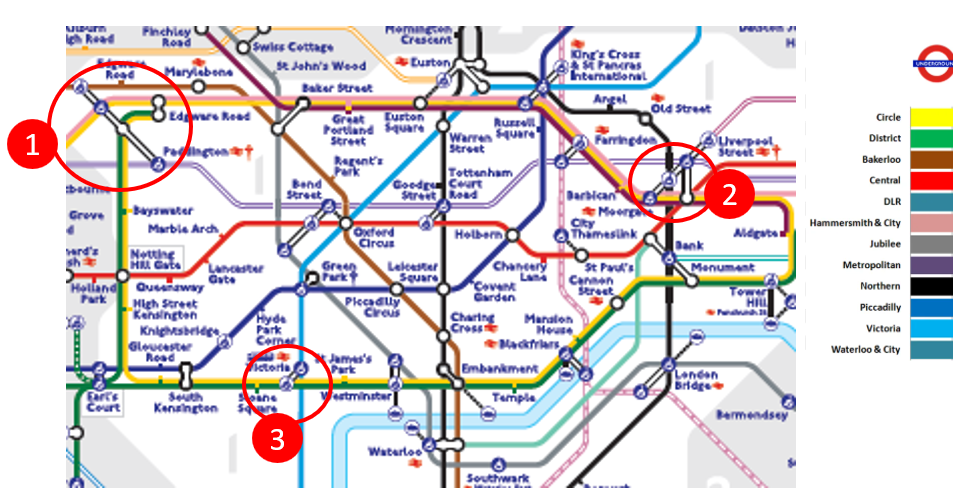
Ask for the Way and answer. But take care of the directions
- From Paddington to Oxford Circus
- From Liverpool Street Station to Oxford Circus
- From Victoria to Oxford Circus to Piccadelly Circus
- From Paddington to Victoria
- From Waterloo to Oxford Circus
- From Earls Court to Oxford Circus
- From Notting Hill Gate to Picadelly Circus
- From Picadelly Circus to Hyde Park Corner. Hyde Park Corner is 10 minutes walk from Buckingham Palace.
By the way: Do you know Speakers’ corner?
Link to the top of the page.
1.3 To Stop the Train (a special song)

Link to the top of the page.
1.4 Speak freely
- Have you been to London and if yes, how did you go there. Train, bus, plane?
- Do you think that the Underground is easy to understand
- Did you make some mistakes in the Underground
- Where did you stay in London
Link to the top of the page.
Mangler men ideer
- De kommer på hopOnHopOff bussen
- Møder et andet turist par, måske et “rødt” Californisk par, så de kan tale før nutid og før datid
- Del 1. Rundvisning på London Castle
- Del 2. Bus Picadelly Circus
- Del 3. Fuckingham Palace og bus forbi Downing Street 10
- 4. Going outside London
- Tidspunkter og køreplaner
- Møde venner
- Måske i virkeligheden 3’er, så de kan tale sammen.
- 5. Deres venner bor selvfølgelig i et rækkehus
- De mest almindelige engelske betegnelser er:
- terraced house — den klassiske britiske betegnelse for et rækkehus.
- terrace house bruges også, især i nogle regioner.
- row house er mere amerikansk engelsk.
- townhouse bruges både i Storbritannien og USA, men betyder ofte lidt mere eksklusive eller moderne rækkehuse og er ikke helt det samme som et traditionelt dansk rækkehus.
- I britisk sammenhæng taler man ofte om:
- mid-terrace house = rækkehus midt i rækken
- end-terrace house = enderækkehus
Øvrige ideer
- Slang
- Texas udtryk
- Hilsner og daglig tale
- Howdy! — klassisk texansk “hej”.
- Y’all — “I” / “jer allesammen”.
- All y’all — ekstra mange mennesker.
- How’s it going, y’all? — meget sydstatsagtigt.
- Typiske texanske vendinger
- Bless your heart
Kan være venligt … eller en meget høflig måde at sige “du er ikke så kvik”. - Fixin’ to
Betyder “er ved at skulle til”.“I’m fixin’ to leave.” - Bigger’n Texas
Noget enormt stort.“That steak is bigger’n Texas.” - This ain’t my first rodeo
“Jeg har prøvet det før.” - Git along, little dogie
Gammel cowboy-vending til kvægdrift.
- Bless your heart
- Hilsner og daglig tale
- Mad og kultur
- BBQ i Texas betyder næsten en religion.
- Chicken-fried steak — meget texansk ret.
- Tex-Mex — blanding af mexicansk og texansk madkultur.
- Forstærkende udtryk
- Darn tootin’! — “helt sikkert!”
- Hotter than blue blazes — ekstremt varmt.
- Madder than a wet hen — meget vred.
- Texas udtryk
- Klassisk London
- Klassiske London-/Cockney-udtryk
- Mate — ven, kammerat
“You alright, mate?” - Cheers — tak / farvel
“Cheers for that.” - Knackered — meget træt
“I’m absolutely knackered.” - Dodgy — mistænkelig eller dårlig kvalitet
“That area looks a bit dodgy.” - Taking the piss — gøre grin med nogen
“Are you taking the piss?” - Gutted — virkelig skuffet
“I missed the train, I’m gutted.” - Peng — meget attraktiv / lækker
“That food is peng.” - Bare — meget / mange
“There were bare people there.” - Bloke — fyr, mand
“Some bloke asked for directions.” - Geezer — typisk London-fyr; lidt rå type
“He’s a proper East End geezer.”
- London
- Typisk britisk dagligsprog i London
- Alright? — standardhilsen (“hvordan går det?”)
Ofte uden forventning om langt svar. - Fancy — have lyst til
“Fancy a pint?” - Chuffed — glad/stolt
“I’m well chuffed.” - Skint — flad, ingen penge
“Can’t go out, I’m skint.” - Loo — toilet
“Where’s the loo?” - Pissed — fuld (i britisk engelsk)
“He got pissed last night.”
Buckingham Palace (Fuckingham), bus forbi Downing Street, Tower Bridge, mange datoer og tidspunkter