2.1 Where Is My Bike? Fokus på ejefald
- John: “This is my bike! It is my bike’s color and my bike’s seat!”
- “No, it is not your bike,” a man says.
- “It is my brother’s bike.” John says, “Look at its wheel! It is my bike’s wheel!”
- A woman says, “Maybe it is the girl’s bike. She is looking for her bike.”
- The girl says, “No, it is not mine. My bike’s basket is blue.”
- John gets angry. “Everyone says it is not my bike, but I know my bike’s look!”
- The man says, “This is my brother’s bike, and its lock is strong.”
- John says, “My bike’s lock is strong too! This is my bike!”
- Another man says, “Look at the bike’s seat. It is old.”
- John says, “My bike’s seat is also old!”
- A boy says, “Maybe it is the teachers’ bike from the school.”
- A woman says, “No, the teachers’ bikes are behind the school.”
- John says, “This is not fair! It is my bike’s frame and my bike’s wheels!”
- The man says, “It is my brother’s bike, and that is his name on it.”
- John looks, but he is still not sure. “It can still be my bike!”
- Then John’s phone rings. It is the pub’s worker.
- The worker says, “Hello, we have your bike outside the pub’s door.”
- John says, “What? Is my bike at the pub’s door?”
- The worker says, “Yes, it is here with your bike’s bag.”
- John looks at the others and says, “Okay I am sorry. I drank a few pints of beer yesterday at the pub…. You are all right, this is not my bike,” and everyone laughs.
Link til toppen af siden.
Spørgsmål
- Find eksempler på ejefald i teksten
- What is John looking for?
- What does John say about the bike?
- What does the girl say about her bike’s basket?
- Why does John get angry?
- Where are the teachers’ bikes?
- What happens when John’s phone rings?
- Who is calling John?
- Where is John’s real bike?
- What is with John’s bike at the pub?
- What does John say at the end?
- Do the other people believe John?
- Why do people laugh at the end?
- Who is right about the bike?
- What do you think John feels at the end?
- Do you know what a hangover is?
Link til toppen af siden.
2.2 United Kingdom, Great Britain and the British Islands. What is what?
- Great Britain = Storbritannien
- British Isles = de britiske øer
- government = regering
- independent = uafhængt
- country = land
- geographical = geografisk
- independence = uafhængighed
- decisions = beslutninger
Many people mix up the names the United Kingdom, Great Britain and the British Isles. They sound similar, but they do not mean the same thing. It is important to understand the difference.
The United Kingdom, or the UK, is a country. It has four parts. These parts are England, Scotland, Wales and Northern Ireland. These four countries work together and have one government. They also have their own culture, traditions and sometimes their own political ideas.
Great Britain is the name of the big island where England, Scotland and Wales are located. Northern Ireland is not on this island. It is on another island together with Ireland, which is an independent country and not part of the UK.
The British Isles is a geographical name. It includes many islands in the area, for example Great Britain and Ireland. This term is about geography, not politics.
There are also political differences inside the UK. In Scotland, many people want independence. This means they want to leave the United Kingdom and become their own country. Some people in Scotland feel that England has too much power. They feel that decisions are often made in London and not in Scotland.
Another important topic is the European Union. When the UK voted to leave the EU in 2016, most people in Scotland wanted to stay in the EU. This created more discussion about independence. Some people think Scotland should leave the UK and join the EU again.
So, the United Kingdom is one country with four parts, but these parts are not always in agreement. Understanding these differences helps us understand politics and culture in this area.

Link til toppen af siden.
Forståelsesspørgsmål (Comprehension)
- What is the United Kingdom (the UK)?
- Name the four parts of the UK.
- What is Great Britain?
- Is Northern Ireland part of Great Britain?
- What is the British Isles?
- Is Ireland part of the UK?
- What does “independence” mean?
- Why do some people in Scotland want independence?
- What happened in 2016 in the UK?
- Why did Brexit create more discussion in Scotland?
- Explain the difference between the UK and Great Britain.
- What is the difference between geography and politics in the text?
- Explain about the political differences inside the UK?
Link til toppen af siden.
Quiz
1. What is the UK?
a) An island
b) A country
c) A city
2. How many parts are there in the UK?
a) 3
b) 4
c) 5
3. Which country is NOT in Great Britain?
a) England
b) Scotland
c) Northern Ireland
4. What is the British Isles?
a) A country
b) A political group
c) A geographical name
5. Is Ireland part of the UK?
a) Yes
b) No
c) Sometimes
6. What do some people in Scotland want?
a) More tourists
b) Independence
c) A new capital
7. Where are many decisions made in the UK?
a) Edinburgh
b) Cardiff
c) London
8. What happened in 2016?
a) The UK joined the EU
b) The UK voted to leave the EU
c) Scotland became independent
9. Did most people in Scotland want to leave the EU?
a) Yes
b) No
c) We don’t know
10. What is the main idea of the text?
a) Travel in the UK
b) Differences between UK, Great Britain and British Isles
c) Food in the UK
Link til toppen af siden.
2.2.1 Local languages in Wales, Scotland and Ireland
- local = lokal
- languages = sprog (egentlig “tungemål”, “tunge” hedder “lingua” på latin)
- welsh = walisisk
- Gaelic = gælisk
On the British Isles, people speak different languages. English is the most common language.
But there are also local languages. In Wales, many people speak Welsh. Welsh is a very old Celtic language.
In Scotland, some people speak Scottish Gaelic. Gaelic is also a Celtic language. In Ireland, people speak Irish Gaelic. These languages are important for culture and history. In Ireland they even have Gaelic Spots like hurling (“hockey” on grass with a ball) and Irish football. Hurlingand these sports are very popular. Today, many people try to keep these languages alive.

In the English Channel there are a few British islands with a french-like language. Very few people speak this language.
Besides Gaelic they speak Scottish English in Scotland. People discuss if Scottish English is a dialect or an independent languagen. Here are few examles of Scottish words that you might know:
- Bonnie = Beautyful (a famous song is about the “bonnie bonnie banks of Loch Lomond and “My Bonnie is over the Ocean)
- Lass = a man
- Lassie = a woman
- Glen = dal
- Lock = sø
- Outlander (fremmed) = sassenach, fra Netflix-serien Outlander. Sassenach = “en sakser”, dvs. en person fra Saksen som ligger i Tyskland
 |  |
Link til toppen af siden.
Dansk → Engelsk:
Hej. Jeg hedder Emma, jeg kommer fra Danmark. Hvad hedder du?
→ Hello. My name is Emma, I come from Denmark. What is your name?
Walisisk (Welsh):
→ Helo. Emma ydw i, dw i’n dod o Ddenmarc. Beth yw dy enw?
Skotsk gælisk (Scottish Gaelic):
→ Halò. ’S e Emma an t-ainm a th’ orm, tha mi à Danmhairg. Dè an t-ainm a th’ ort?
Irsk gælisk (Irish Gaelic):
→ Dia dhuit. Emma is ainm dom, is as an Danmhairg mé. Cad is ainm duit?
Jerrais. Tales på Jersey, en af øerne i den Engelske Kanal. Det ligner fransk:
→ Bouônjour. Jé m’appelle Emma, jé sis d’Danemarche. Coumme est qu’vos appelez?

Link til toppen af siden.
2.3 Northern Ireland. A Review
- nationalists = nationalister
- republicans = republikanere (forstået på den måde, at de er imod kongedømme og vil have en republik lige som i Irland)
- protestants (“prots”)= protestanter
- catolichs (“cats”) = katolikker
- create = skabe
- tension = spændinger
- “the Troubles” = “problemerne”, navnet på en tidsperiode, hvor Nordirland var på randen af en borgerkrig
- Bloody Sunday = “blodige søndag”, men det kan også betyde “forbandede søndag”
- unarmed = ubevæbnede
- protesters = demonstranter
- loyalists = loyalister, folk i Nordirland der er loyale mod den britiske krone
- unionists = unionister, folk i Nordirland der ønsker et forenet Irland (dvs. inklusive Nordirland)
- Northern Ireland is a part of the United Kingdom.
- It is in the north of the island of Ireland.
- The province is often called Ulster.
- But Ulster has nine counties, and only six are in Northern Ireland.
- The other three counties are in the Republic of Ireland.
- Many people in Northern Ireland have different identities.
- Some people are British and want to stay in the UK.
- These people are often called unionists or loyalists.
- Other people are Irish and want a united Ireland.
- These people are often called nationalists or republicans.
- The conflict has roots in history from the 1600s.
- English and Scottish Protestants moved to Ireland.
- Many Irish Catholics lost land and power.
- This created tension between the groups.
- In 1921, Ireland was divided.
- Northern Ireland stayed in the United Kingdom.
- The Republic of Ireland became independent.
- But the conflict did not stop.
- In the 1960s, violence started again.
- This period is called “the Troubles”.
- There were fights between groups and the British army.
- Many people were hurt or killed.
- One important event is Bloody Sunday.
- On that day in 1972, British soldiers shot unarmed protesters.
- Fourteen people died.
- This made the conflict worse.
- The Troubles lasted for many years.
- In 1998, there was a peace agreement called the Good Friday Agreement.
- It helped to stop most of the violence.
- Today, Northern Ireland is more peaceful, but some differences still exist.
- People who want closer relations to England are mostly protestants and are called “loyalists”. They are loyal to the British Crown
- People who want closer relations with Ireland are mostly catolics and are called “unionist”. They want an union with Ireland.
Link til toppen af siden.


Da U2 var størst lavede de en sang om Bloody Sunday, hvor en demonstration i Derry/Londonderry blev mejet ned. Sangen hedder Sunday Bloody Sunday
| I can’t believe the news today Oh, I can’t close my eyes and make it go away — How long, how long must we sing this song? How long? How long? — ‘Cause tonight We can be as one Tonight — Broken bottles under children’s feet Bodies strewn across the dead end street But I won’t heed the battle call It puts my back up Puts my back up against the wall — Sunday, Bloody Sunday Sunday, Bloody Sunday Sunday, Bloody Sunday — And the battle’s just begun There’s many lost, but tell me who has won The trench is dug within our hearts And mothers, children, brothers, sisters Torn apart —- Sunday, Bloody Sunday Sunday, Bloody Sunday — How long… How long must we sing this song? How long? How long… ’cause tonight…we can be as one Tonight…tonight… — Sunday, Bloody Sunday Sunday, Bloody Sunday — Wipe the tears from your eyes Wipe your tears away Oh, wipe your tears away Oh, wipe your tears away (Sunday, Bloody Sunday) Oh, wipe your blood shot eyes (Sunday, Bloody Sunday) Sunday, Bloody Sunday (Sunday, Bloody Sunday) Sunday, Bloody Sunday (Sunday, Bloody Sunday) — And it’s true we are immune When fact is fiction and TV reality And today the millions cry We eat and drink while tomorrow they die (Sunday, Bloody Sunday) — The real battle just begun To claim the victory Jesus won On… Sunday Bloody Sunday Sunday Bloody Sunday… | Jeg kan ikke tro på nyhederne i dag Åh, jeg kan ikke lukke øjnene og få det til at forsvinde — Hvor længe, hvor længe skal vi synge denne sang? Hvor længe? Hvor længe? — Fordi i aften Kan vi være som én I aften — Knuste flasker under børns fødder Lig spredt ud over blindgyden Men jeg vil ikke lytte til kampkaldet Det sætter min ryg op Sætter min ryg op mod muren — Søndag, Blodige Søndag Søndag, Blodige Søndag Søndag, Blodige Søndag — Og kampen er lige begyndt Der er mange mistede, men fortæl mig, hvem der har vundet Skyttegraven er gravet i vores hjerter Og mødre, børn, brødre, søstre Revet fra hinanden —- Søndag, Blodige Søndag Søndag, Blodige Søndag — Hvor længe… Hvor længe skal vi synge denne sang? Hvor længe? Hvor længe… for i nat…kan vi være som én I nat…i nat… — Søndag, Blodige Søndag Søndag, Blodige Søndag — Tør tårerne af dine øjne Tør dine tårer væk Åh, tør dine tårer væk Åh, tør dine tårer væk (Søndag, Blodige Søndag) Åh, tør dine blodsprængte øjne (Søndag, Blodige Søndag) Søndag, Blodige Søndag (Søndag, Blodige Søndag) Søndag, Blodige Søndag (Søndag, Blodige Søndag) — Og det er sandt, at vi er immune Når fakta er fiktion og tv-virkelighed Og i dag græder millionerne Vi spiser og drikker, mens de dør i morgen (Søndag, Blodige Søndag) — Den virkelige kamp er lige begyndt For at gøre krav på den sejr, Jesus vandt På… Søndag Blodige Søndag Søndag Blodige Søndag… |
Link til toppen af siden.
2.4 An argument
Lad os starte med dem her, og der er ikke undertekster. Det er selveste Monty Python. Forstå så meget, som du kan 🙂
Link til toppen af siden.
Ordliste til arguments
- I think that … → Jeg synes at …
- I agree with you …. → Jeg er enig med dig
- I do not agree … → Jeg er ikke enig
- In my opinion … → Efter min mening…
- What do you think? → Hvad synes du?
- Can you explain that? → Kan du forklare det?
- I understand your point of view → Jeg forstår dit synspunkt
- That is a good idea → Det er en god idé
- I am not sure → Jeg er ikke sikker
- Maybe we can… → Måske kan vi…
- Let us find a solution → Lad os finde en løsning
- I see it differently → Jeg ser det anderledes
- That is interesting → Det er interessant
- Can you repeat that? → Kan du gentage det?
- Let us talk about this → Lad os tale om det
- I don’t care → Jeg er ligeglad
- I disagree → Jeg er uening
Link til toppen af siden.
Opgave 1. Dialog
Tom: I think that teamwork is very important at work.
Anna: I agree with you. Teamwork is important.
Tom: Yes, we help each other and finish faster.
Anna: That is true. In my opinion, good communication is also important.
Tom: I agree. We need to talk together every day.
Anna: But I think breaks should be longer.
Tom: I do not agree. I think the breaks are fine.
Anna: I am not sure. We work hard all day.
Tom: That is true, but we also need to finish our tasks.
Anna: I see it differently. I think longer breaks can help us work better.
Tom: Maybe, but I think it can slow down the work.
Anna: Maybe we can find a solution.
Tom: Yes, that is a good idea.
Anna: We can have short breaks, but take them more often.
Tom: I agree with you. That sounds good.
Anna: Then we can rest and still do our work.
Tom: Yes, that is a good solution.
Link til toppen af siden.
Opgave 2. Argue about the following. Skriv dine svar i chatten
- The moon is a big, yellow cheese
- The Swedish Language is really ugly even worse than the Dutch
- Italians are very diciplined but Germans are not
- AGF is the best football club in … the World/Europe/Scandinavia/Denmark/Jutland/Aarhus
- Carlsberg is probally the best beer in the world
- It is nice to get up early in the morning
Link til toppen af siden.
Opgave 3. Lav din egen dialog. Skriv en kort dialog
Brug disse fraser:
- I think that…
- I agree / I do not agree
- In my opinion…
- What do you think?
- I am not sure
- That is a good idea
👉 Tal om et emne:
- work
- free time
- food
- mobile phones
Krav:
- Min. 6 replikker
- Brug mindst 3 fraser
Link til toppen af siden.
2.5 Visiting Scotland. Focus on Verbs in the Present, the Past, and the Future
Chapter 1. Meet Liam and Fiath
- married = gift
- couple = par
- celebrate = festligholde
- wedding anniversary = bryllupsdag
- spend = bruge
- control desc = kontrolluge (her: Paskontrol)
- wait in line = vente i kø
- nervous = nervøs
- officer = officer/uniformeret person, men her vedkommende, der kontrollerer deres pas
- nod = nikke (bekræftende)
- tram = sporvogn/letbane
- enjoy = nyde
- suitcase = kuffert
- receptionist = receptionist
- excited = glade, opstemte
- ready = klar
- explore = udforske
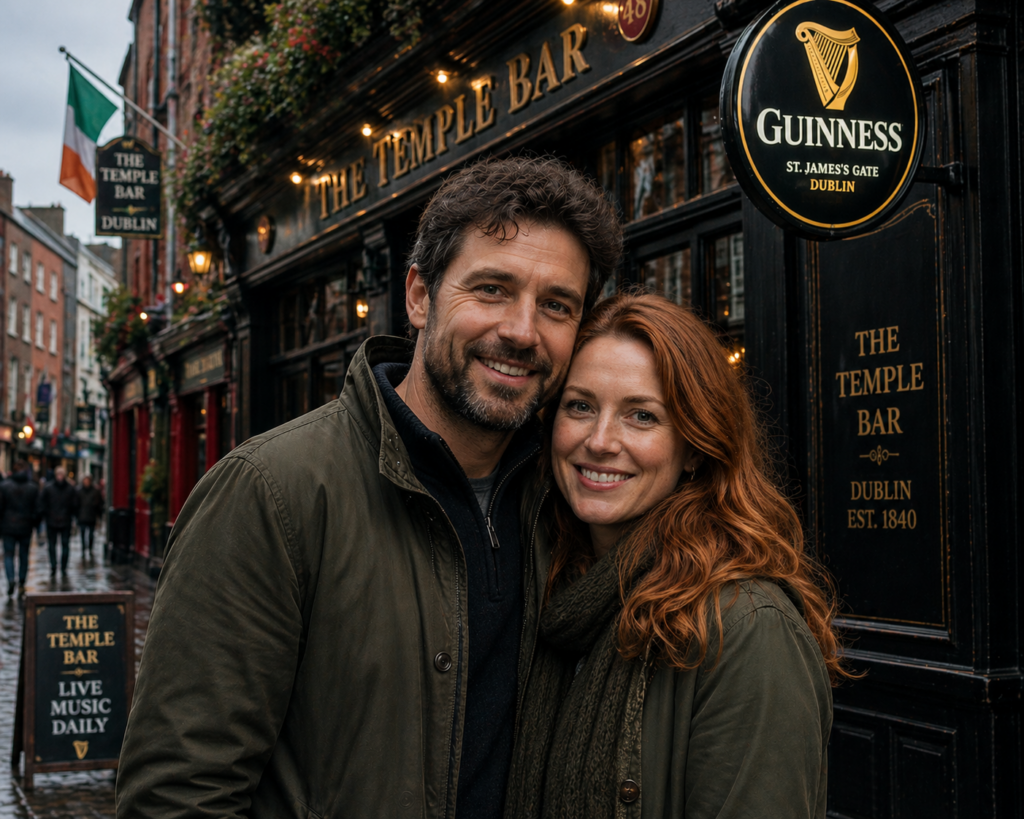
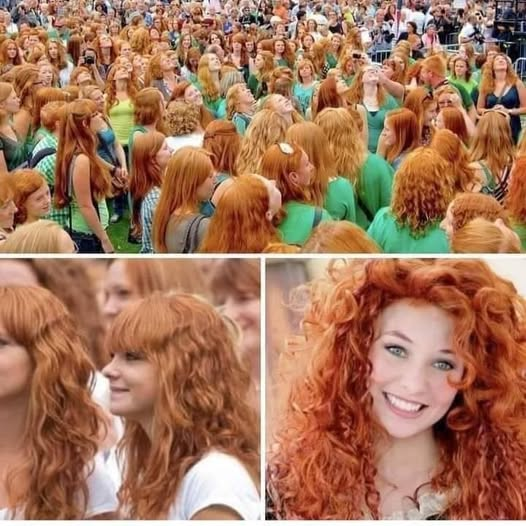
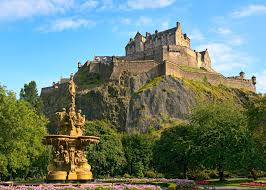
Liam and Fiath are a married couple from Ireland. To celebrate their 10th wedding anniversary, they fly to Edinburgh to spend a weekend there. Edinburgh is the capital of Scotland.
Chapter 2. Arriving at the Airport of Edinburgh
Liam and Fiath are a couple from Ireland.
They arrive at the airport in Edinburgh in the morning.
First, they have to check their visa.
They go to the control desk and wait in line.
An officer is checking passports and asking questions.
When it’s their turn, they give their passports.
Liam feels a bit nervous, but Fiath is smiling.
The officer looks at their visa and nods.
They are allowed to enter, and they feel happy.
After that, they take the tram into the city.
They are sitting by the window and watching the streets.
Liam is pointing at old buildings.
Fiath is taking pictures and enjoying the view.
They arrive in Edinburgh and walk to their hotel.
Liam is carrying the suitcase, and Fiath is holding a bag.
They go inside and meet the receptionist.
The receptionist asks for their names and gives them a key.
They go to their room and open the door.
The room looks nice and clean.
Fiath is sitting on the bed and laughing.
Liam opens the window and sees the city.
They are feeling excited and ready to explore the city.
They walk down the street and find a nice restaurant for having dinner.


Link til toppen af siden.
Chapter 3. At the Restaurant
- rembember = huske
- honeymoon = bryllupsrejse
- arrive = ankomme
- easy = nem
- straight = lige
- through = igennem
Liam: “Do you remember our honeymoon here?”
Fiath: “Yes, I was just thinking about it.”
Liam: “We arrived in Edinburgh early in the morning as well back then.”
Fiath: “And we did not need a visa.”
Liam: “That was easier than now.”
Fiath: “Do you remember the airport?”
Liam: “Yes, we were walking straight through.”
Fiath: “No long lines, and no one was checking so much.”
Liam: “And there was no tram.”
Fiath: “That’s right, we were taking a bus into the city.”
Liam: “We were sitting together and watching the road.”
Fiath: “And I was taking pictures from the window.”
Liam: “We were talking all the time.”
Fiath: “Yes, and we were laughing a lot.”
Liam: “When we arrived in Edinburgh, we walked to a small hotel.”
Fiath: “You were carrying your suitcase.”
Liam: “And you were holding your bag.”
Fiath: “The hotel was simple, but nice. But we didn’t have much money then.”
Liam: “I remember you were sitting on the bed and laughing.”
Fiath: “And you were looking out the window.”
Liam: “We were very happy.”
Fiath: “Yes, it was a special time.”
Link til toppen af siden.
Part 3. Going back
- high-speed train = højhastighedstog
- instead of = i stedet for
- tram = sporvogn/letbane
- tatoo = hedder også tatoo på dansk. En hel særlig og verdensberømt millitærparade med masser af musik især sækkepiber og trummer (pibes & drums) , som holdes på Edingburg Castle hvert år
- perfect = perfekt
Liam and Faith are now on their way home after a real nice weekend.
Liam: “Do you think we will come back here in 10 years?”
Fiath: “Yes, I think we will visit Edinburgh again.”
Liam: “Next time, we will not need a visa.”
Fiath: “No, everything will be easier then.”
Liam: “Our passports will be on our phones.”
Fiath: “Yes, we will just show them on the screen.”
Liam: “Do you think the airport will be different?”
Fiath: “I think it will be bigger and more modern.”
Liam: “And maybe there will be a train to the city.”
Fiath: “Yes, we will take a high-speed train instead of the tram.”
Liam: “We will be sitting by the window again.”
Fiath: “And we will be watching the city together.”
Liam: “I will be pointing at the old buildings.”
Fiath: “And I will be taking pictures again.”
Liam: “Where will we stay?”
Fiath: “We will be staying in a luxury hotel.”
Liam: “Yes, we will have more money then.”
Fiath: “And we will book a big, beautiful room.”
Liam: “We will be talking and laughing like before.”
Fiath: “Maybee we will watch the famous tatoo at the Edingburgh Castle.”
Liam: “That’s a great idea.”
Liam: “It will be special again.”
Fiath: “Yes, it will be a perfect trip.”
Link til toppen af siden.
Spørgsmål 1. Examine the Tense of the Verbs (verbernes tider)
Kik teksten igennem.
- Hvilke tider og pesoner er verberne i
- Bruges “-ing formen” og hvordan
Link til toppen af siden.
Spørgsmål 2. Answer the Questions
Kapitel 1.
- Who is Liam and Fiath?
- Where are they from?
- Why do they need visas to go to Scotland?
- Why do you think that they are called Liam and Fiath and not for instance Phillip and Elizabeth
Kapitel 2 (nutid)
Where are Liam and Fiath going?
- Why do they have to check their visa?
- What is the officer doing?
- How is Liam feeling?
- What is Fiath doing while they are waiting?
- How do they go to the city?
- What are they watching from the tram?
- What is Liam pointing at?
- What is Fiath taking pictures of?
- Where are they staying?
Kapitel 3 (datid)
- Where were Liam and Fiath going?
- Why did they have to check their visa?
- What was the officer doing?
- How did Liam feel?
- What was Fiath doing while they were waiting?
- How did they go to the city?
- What were they watching from the tram?
- What was Liam pointing at?
- What was Fiath taking pictures of?
- Where did they stay?
Kapitel 4 (fremtid)
- Where will Liam and Fiath go?
- Why will they check their visa?
- What will the officer be doing?
- How will Liam feel?
- What will Fiath be doing while they are waiting?
- How will they go to the city?
- What will they be watching from the tram or train?
- What will Liam be pointing at?
- What will Fiath be taking pictures of?
- Where will they stay?
Spørgsmål 3. Changing the Time
- Translate chapter 2 to the past tense.
Spørgsmål 4. On your Own
- Tell about your own experience when entering the UK
- Try to to it first in the present, then in the past tense.